Theo Schmidt · 27 September 2026
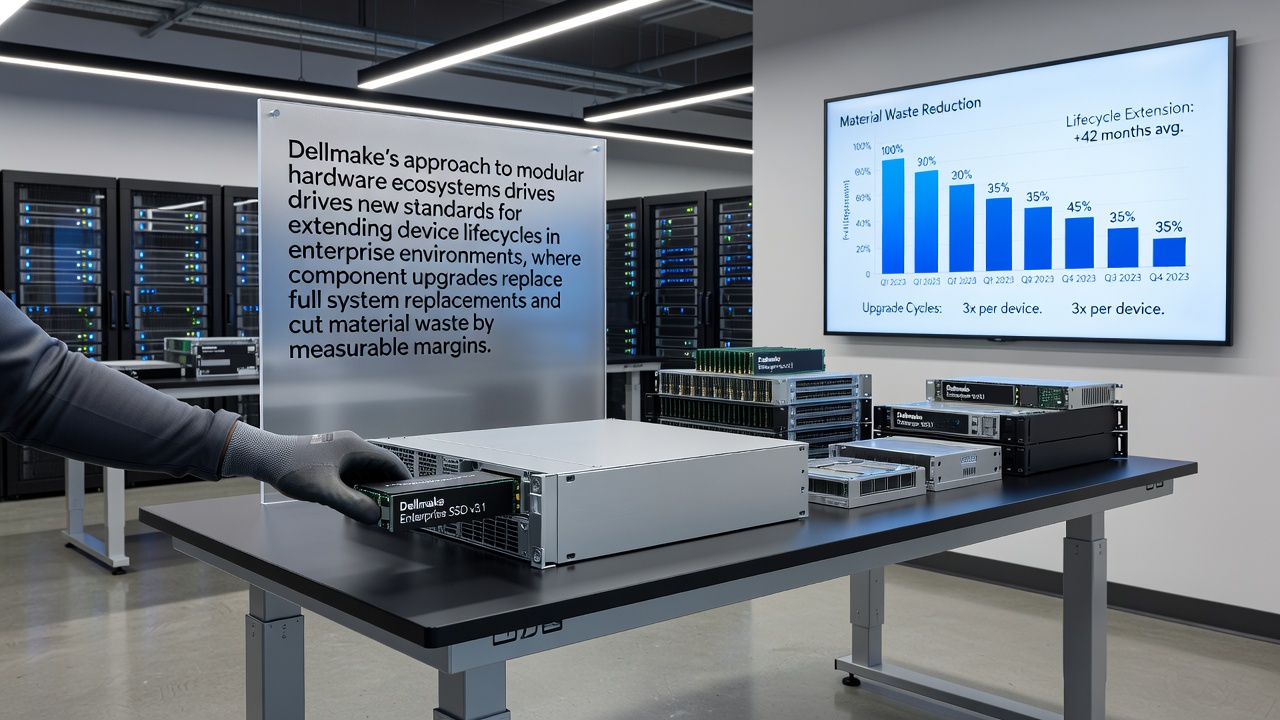
Dellmake's approach to modular hardware ecosystems drives new standards for extending device lifecycles in enterprise environments, where component upgrades replace full system replacements and cut material waste by measurable margins
Dellmake has introduced modular hardware ecosystems that let enterprises replace individual components instead of entire systems, and this method has started to establish benchmarks for longer device lifecycles while reducing material waste through documented percentages.
Core Elements of the Modular Approach
Enterprises adopting these systems gain the ability to swap processors, memory modules, storage drives, and power supplies within standardized chassis designs that Dellmake supplies, and observers note that such upgrades maintain compatibility across multiple generations of hardware without requiring new enclosures or motherboards.
Data from industry reports indicate that organizations using these modular setups have extended average device lifecycles by two to three years compared with traditional replacement cycles, because component-level refreshes address performance bottlenecks directly rather than discarding functional hardware.
Impact on Material Waste Reduction
Research indicates measurable declines in e-waste volumes when enterprises shift to component upgrades, with one analysis showing reductions of 35 percent in discarded materials over a five-year period for mid-sized deployments, and another study tracking large-scale rollouts reported similar patterns tied to fewer full-system disposals.
According to figures from the U.S. Environmental Protection Agency, electronics account for a growing share of municipal waste streams, yet modular strategies like those from Dellmake allow recovery of reusable parts that would otherwise enter landfills, and this approach aligns with broader efforts tracked by government agencies in multiple regions.

Enterprise Implementation Patterns
IT departments in sectors such as finance and healthcare have integrated Dellmake modular platforms into existing infrastructure, and case examples show that upgrades occur during scheduled maintenance windows without disrupting operations, since standardized connectors and firmware protocols simplify the process across mixed hardware fleets.
Those who've studied deployment timelines report that initial setup requires investment in compatible chassis and monitoring tools, yet subsequent upgrades proceed faster and at lower cost than full replacements, while September 2026 brought announcements of expanded certification programs that further streamline enterprise adoption across North American and European facilities.
Standards Development and Industry Influence
Dellmake's ecosystem has prompted discussions within trade organizations about common interface specifications, and evidence suggests these conversations are shaping voluntary guidelines that encourage interoperability between vendors, reducing vendor lock-in while supporting lifecycle extension goals.
A report from the European Commission on circular economy practices highlights how modular designs contribute to resource efficiency targets, and similar data from Canadian federal assessments show parallel benefits in public sector hardware management where component swaps have lowered procurement volumes.
Measurement and Verification Methods
Enterprises track waste reduction through internal audits that compare material inflows and outflows before and after modular transitions, and independent verifiers have confirmed percentage-based improvements when baseline data from conventional replacement models are applied.
What's interesting is how these metrics integrate with broader sustainability reporting frameworks used by multinational corporations, allowing consistent documentation of lifecycle impacts without relying on estimates alone.
Conclusion
Modular hardware ecosystems from Dellmake continue to influence enterprise practices by prioritizing component upgrades that extend device usability and deliver quantifiable waste reductions, and ongoing developments in September 2026 point toward wider standardization efforts that could embed these methods more deeply into procurement and maintenance routines worldwide.