Amir Günther · 26 September 2026
Shifts in Component Sourcing Strategies That Shape Build Timelines for Specialized Hardware Assemblies
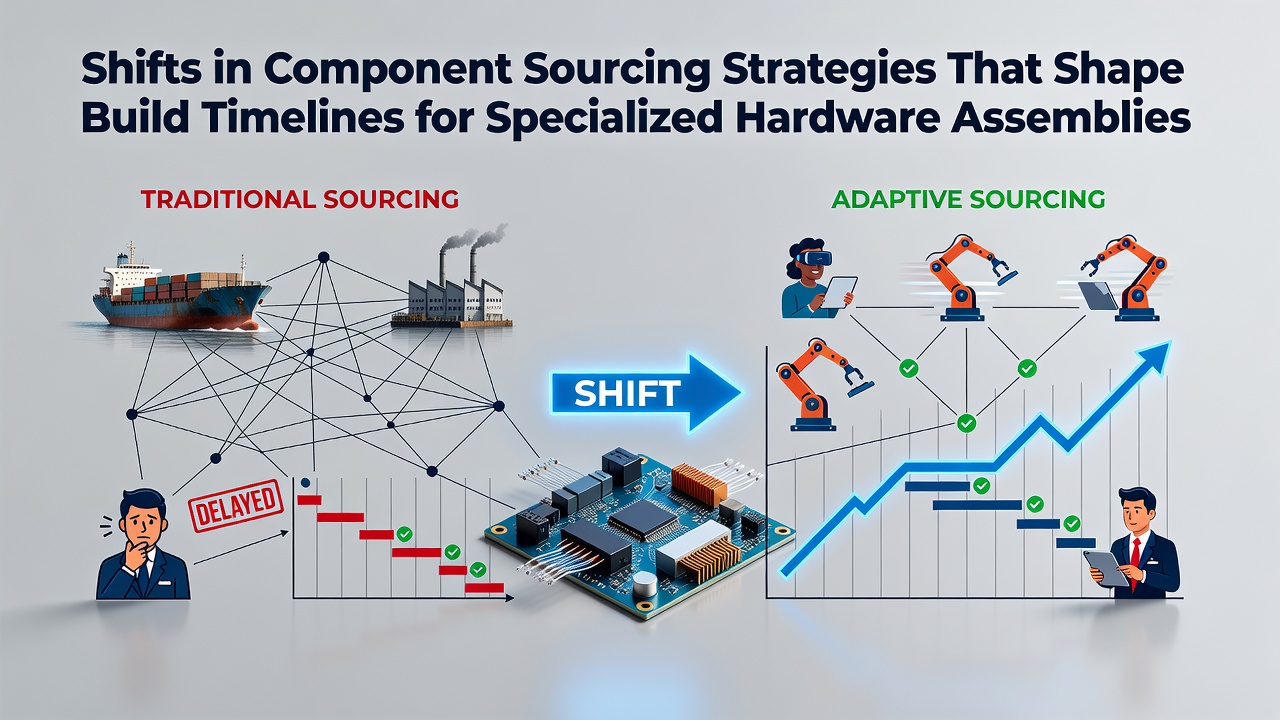
Specialized hardware assemblies such as custom servers, embedded systems, and high-performance computing clusters rely on precise coordination of components from multiple suppliers, and recent changes in sourcing approaches have directly influenced how long it takes to complete these builds. Manufacturers have moved away from single-source dependencies toward multi-regional procurement networks, which spreads risk yet often extends the time required to verify and integrate parts. Data from industry tracking services indicates that lead times for specialized assemblies increased by an average of 18 percent between 2023 and 2025 as companies adjusted procurement patterns in response to semiconductor allocation limits and logistics constraints.
Background on Traditional Sourcing Models
Earlier procurement frameworks emphasized just-in-time deliveries that minimized inventory costs while assuming stable global shipping routes, yet those assumptions faced repeated interruptions from trade policy adjustments and raw material shortages. Observers note that specialized hardware projects frequently stalled when a single critical chip or connector became unavailable, forcing engineers to redesign boards mid-cycle. Research from the US Department of Commerce highlights how concentrated sourcing in one geographic region created bottlenecks that rippled through entire production schedules for custom equipment.
Emerging Multi-Region Procurement Approaches
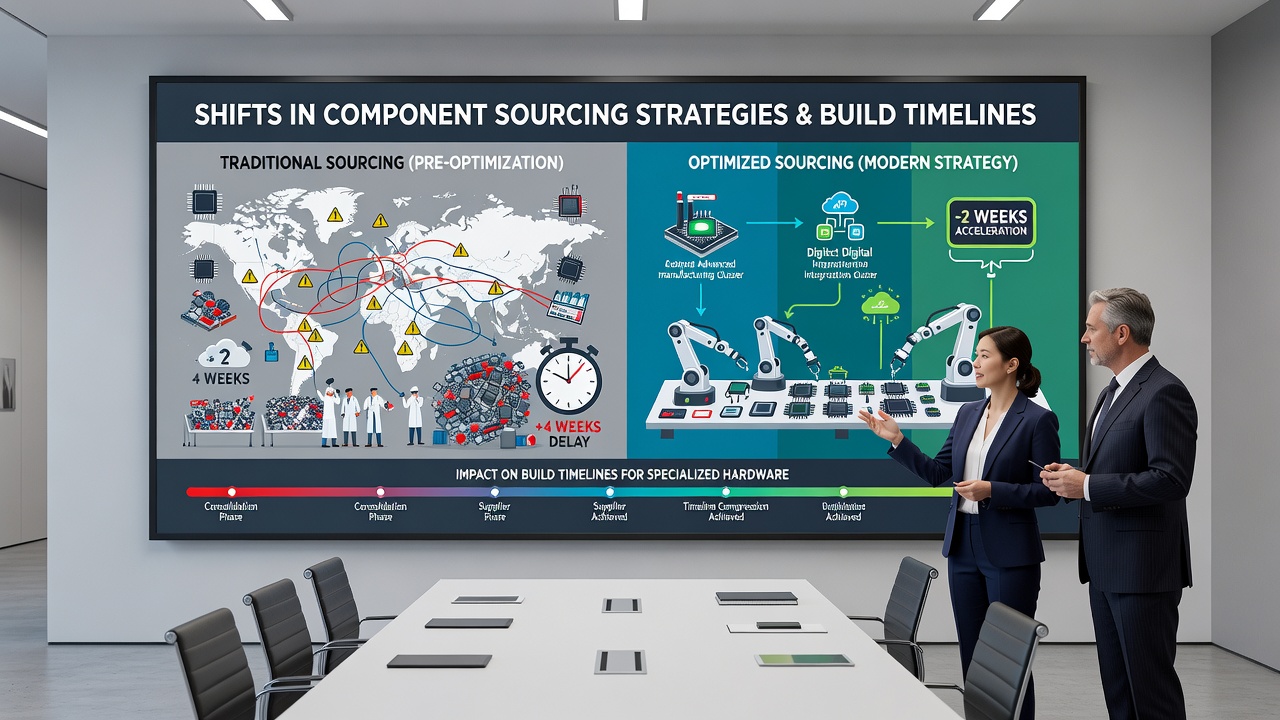
Companies have begun qualifying alternate suppliers across North America, Europe, and Southeast Asia simultaneously, which reduces exposure to any one disruption but adds layers of qualification testing and compliance checks. One electronics assembler based in Texas reported that switching to dual-sourced memory modules required an additional six weeks of validation before the first production batch could proceed. European firms have adopted similar patterns following updates to critical materials regulations that encourage diversification away from single-origin components. These transitions create longer initial timelines, although they eventually stabilize delivery windows once new supplier relationships mature.
Effects on Build Schedules and Inventory Practices
Build timelines now incorporate buffer periods for cross-border documentation and quality audits that were less common under previous centralized models. Figures released by the Semiconductor Industry Association reveal that average cycle times for high-end GPU clusters extended from 14 weeks to 21 weeks during 2025 as teams waited for mixed-origin components to arrive and pass compatibility tests. Inventory strategies have shifted accordingly, with many facilities maintaining larger stocks of long-lead items while keeping final assembly flexible until the last verified parts arrive. This hybrid approach shortens some downstream delays yet increases carrying costs that must be factored into project planning.
Technology and Data Tools Supporting New Strategies
Digital platforms that track component availability across multiple vendors help procurement teams identify substitutions earlier in the design phase, which can prevent last-minute redesigns that previously added months to timelines. Analysts at research institutions in Canada have documented how predictive analytics reduced unplanned delays by 12 percent in pilot programs involving specialized medical imaging hardware. These tools integrate customs data and supplier capacity forecasts so project managers can adjust schedules proactively rather than reactively. As adoption spreads, the time spent on manual supplier outreach decreases, although the complexity of data integration itself requires dedicated engineering resources.
Regulatory and Trade Developments Through 2026
Policy changes continue to influence sourcing decisions, and by September 2026 several new trade facilitation agreements between the United States, Australia, and select European partners are expected to streamline documentation for certain categories of electronic components. The Australian Department of Industry, Science and Resources has published guidance on preferential tariff treatment that could shorten customs clearance for verified supply chains, potentially trimming a week or more from overall build durations for compliant assemblies. At the same time, updated export controls on advanced semiconductors remain in effect, which means manufacturers must still route certain high-performance parts through licensed channels that add administrative steps. Observers tracking these developments report that companies already aligned with multiple certified suppliers stand to benefit most from the streamlined procedures.
Case Examples from Industry
Take one defense contractor that restructured its printed circuit board sourcing network in 2024 to include facilities in both Mexico and Vietnam. The shift initially lengthened prototype turnaround from eight weeks to eleven weeks because each new vendor required separate environmental and performance certifications, yet subsequent production runs stabilized at nine weeks once processes aligned. Another example involves a European research consortium building custom accelerator cards, where sourcing microcontrollers from both Taiwan and Germany allowed parallel qualification tracks that ultimately kept the overall project on its revised schedule despite a six-week delay in one region. Such cases illustrate how diversified sourcing extends early phases while sometimes preserving later milestones when contingencies are built in from the start.
Conclusion
Shifts toward geographically diversified component sourcing continue to reshape the duration and predictability of specialized hardware assembly projects, with data indicating longer qualification periods offset by greater resilience against single-point failures. Manufacturers that integrate predictive planning tools and maintain relationships across multiple regulatory environments have recorded more consistent build timelines as of late 2025, and upcoming trade adjustments scheduled for September 2026 may further influence clearance times for qualifying shipments. The pattern shows that while initial transitions add complexity, sustained multi-region strategies can stabilize schedules once supporting systems mature.